Fly Agaric
Amanita muscaria
Fungi & Lichens
Conifer and mixed forest floor
iNaturalist record
Meet this species
Few mushrooms announce the hidden fungal world as dramatically as fly agaric. Beneath the famous fruiting body is a network of fungal threads associated with tree roots, part of the intimate underground partnerships through which forest trees and fungi exchange resources. The mushroom above ground is a temporary reproductive structure produced by that much larger living network.
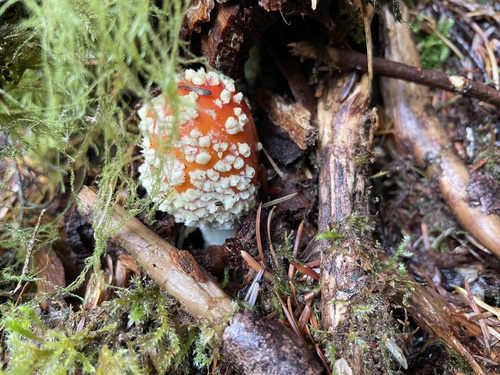
Red fly agaric mushroom with pale patches growing on the coastal forest floor.
What to look for:
Look for the unmistakable storybook mushroom: a rounded to flattened red or orange-red cap, often scattered with pale wart-like patches, above a white stem. Colour and the number of patches can vary, but a fresh fly agaric can look almost impossibly theatrical among moss and needles.
Why It Matters Here:
Fly agaric is a wonderful doorway into one of the forest's great ecological secrets: trees do not live alone. Their roots participate in vast communities of fungi, microorganisms and other organisms that influence how water and nutrients move through forest soil.
Field Record
Documented at Greene Point through field observations and photographs recorded on iNaturalist.