Northern Red Belt
Fomitopsis mounceae
Fungi & Lichens
Dead and dying conifer wood, logs, snags and stumps
Multiple iNaturalist records
Meet this species
Northern red belt is one of the wood-decay fungi that reveal a tree's second ecological life. Once wood begins to die, fungal networks penetrate it and transform its structure and chemistry over years. What looks like a solid log gradually becomes softer, richer habitat capable of holding water and supporting insects, mosses, seedlings and countless microscopic organisms.
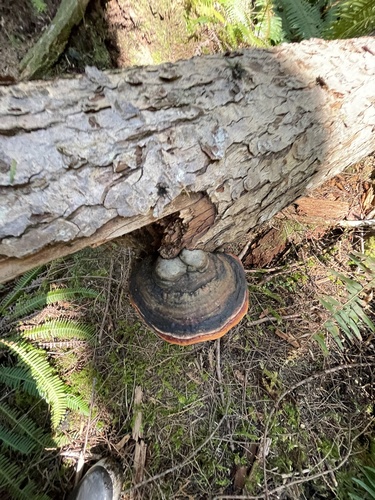
Northern red belt bracket fungus growing from dead conifer wood.
What to look for:
Look for a tough shelf-like conk projecting from wood, often with a pale growing margin and darker reddish-brown banding toward the centre. Unlike a fleeting soft mushroom, these substantial fruiting bodies can persist and become part of the familiar architecture of an old log or snag.
Why It Matters Here:
Dead wood is not ecological waste. Fungi help convert standing and fallen trees into reservoirs of moisture, habitat and slowly recycled nutrients. Their work links forest growth, death and renewal into one continuous process.
Field Record
Documented at Greene Point through field observations and photographs recorded on iNaturalist.