Redshank
Ceratodon purpureus
Plants & Mosses
Exposed or disturbed soil, rock, gravel and other rapidly drying surfaces
iNaturalist record
Meet this species
Redshank is a reminder that mosses are not confined to deep shade and ancient logs. This remarkably adaptable species is a pioneer of exposed and disturbed surfaces and can tolerate conditions that would quickly dry many forest mosses. It is often among the small plants that begin turning bare substrate back into a biologically active surface.
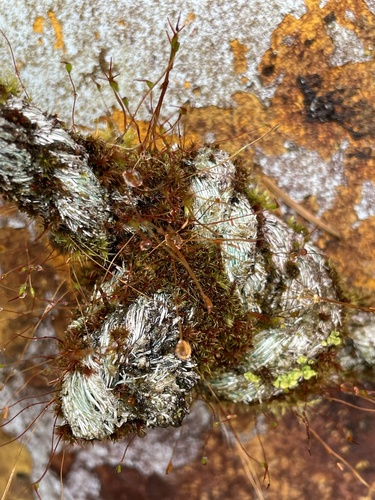
Small reddish-green tufts of redshank moss colonizing an exposed surface.
What to look for:
Look for short dense tufts that may be green, reddish or purplish. When fertile, slender reddish stalks raise narrow capsules above the moss, making a colony considerably easier to recognize.
Why It Matters Here:
Including a disturbance-tolerant moss alongside the lush forest species gives a fuller picture of how bryophytes function across the landscape. Some preserve humid microhabitats; others are among the first plants to occupy newly exposed ground and begin the slow work of rebuilding surface complexity.
Field Record
Documented at Greene Point through field observations and photographs recorded on iNaturalist.