Western Toad
Anaxyrus boreas
Amphibians & Insects
Moist forest, wetlands and freshwater habitats
iNaturalist records: 2022-2023
Meet this species
Western toads use both aquatic and terrestrial habitat during their life cycle. Eggs and tadpoles develop in water, while juveniles and adults spend much of their lives on land and may travel considerable distances through surrounding habitat. Five observations across 2022 and 2023 make western toads one of the stronger repeated vertebrate records in this dataset.
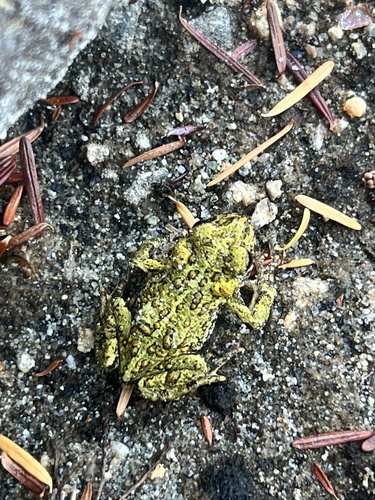
Western toad observed in moist habitat within the Glasgow Creek–Greene Point landscape.
What to look for:
Look for a stout, low-bodied toad with dry, warty skin and prominent glands behind the eyes. Colour can vary, but many individuals show a pale stripe running down the centre of the back. Young toads may occur in large numbers near breeding areas.
Why It Matters Here:
Western toads physically embody the watershed idea: the same animal depends on water and land at different stages of its life. Their presence helps connect wetlands and freshwater habitat with the surrounding forest and demonstrates why protecting ecological connections matters.
Field Record
Documented at Greene Point through field observations and photographs recorded on iNaturalist.