Birds & Mammals
Moving through one connected landscape.
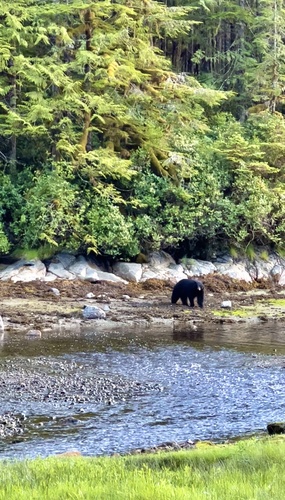
American Black Bear
American black bears are part of the larger coastal forest ecosystem surrounding Glasgow Creek and Greene Point. They move across broad home ranges in search of seasonal foods and shelter, crossing forest, riparian areas and other connected habitats rather than remaining within a single ecological zone. A bear observation therefore represents much more than one charismatic animal: it is evidence that the estuary exists within a landscape large enough to support wide-ranging wildlife.
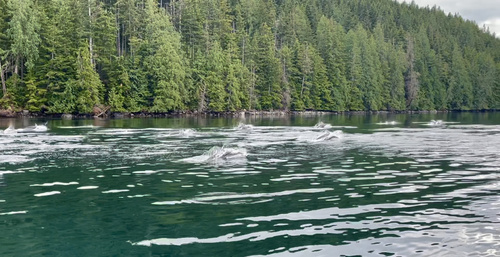
Pacific White-sided Dolphin
Pacific white-sided dolphins move through the channels and coastal waters of the northeastern Pacific, sometimes in energetic social groups. The Greene Point record extends the field guide beyond creek, forest and nearshore habitat into the larger marine system connected to the estuary.
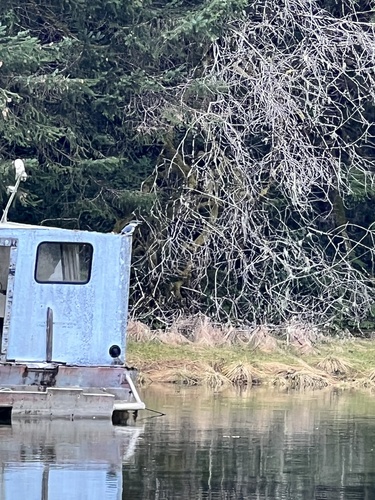
Belted Kingfisher
Belted kingfishers are closely associated with water because fish and other aquatic prey make up much of their diet. Around an estuary or creek they can move between shoreline perches, freshwater habitat and nearshore marine waters, making them one of the most visible links between aquatic food webs and the surrounding terrestrial landscape.
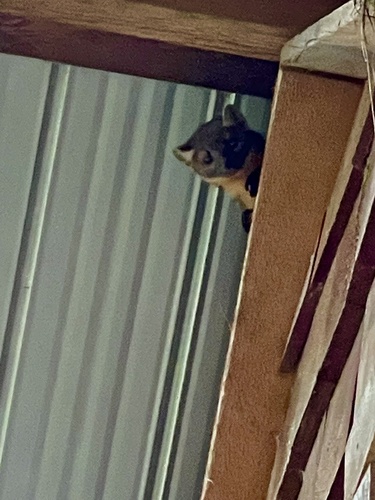
Pacific Marten
Pacific martens are small forest carnivores that climb, forage and shelter within structurally complex woodland. Their presence adds another predator to the Glasgow Creek and Greene Point landscape and demonstrates that the project area is used by animals whose ecological needs extend far beyond the shoreline itself.