Plants & Mosses
From forest floor to estuary edge.
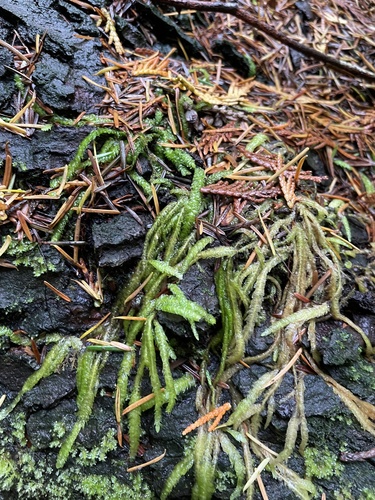
Waved Silk-moss
Waved silk-moss is one of the mosses that gives moist coastal forest floors their lush, layered character. Its flattened shoots spread over humus, wood and shaded ground where humidity remains high. Rather than being simply a green covering, a moss mat creates its own tiny landscape: holding moisture, catching organic particles and providing protected spaces for fungi, microorganisms and small invertebrates.
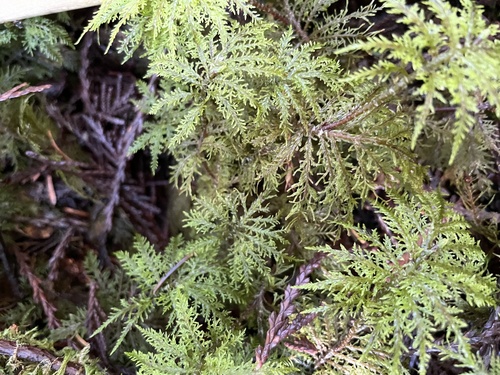
Stairstep Moss
Stairstep moss records time in its architecture. New growth develops in successive tiers, so a single shoot can preserve several years of visible growth. Across the forest floor these branching shoots form soft carpets that intercept water, accumulate fine organic material and contribute to the humid microclimate close to the ground.
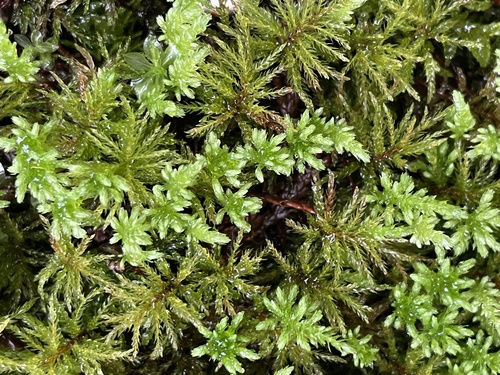
Menzies' Tree Moss
Menzies' tree moss brings the architecture of the surrounding forest down to miniature scale. Its upright, tree-like shoots rise from wet humus, logs and other damp surfaces in coastal forest. Large mosses like this add considerable three-dimensional structure to the forest floor, creating shaded, humid spaces only millimetres or centimetres high but ecologically meaningful to the organisms living there.
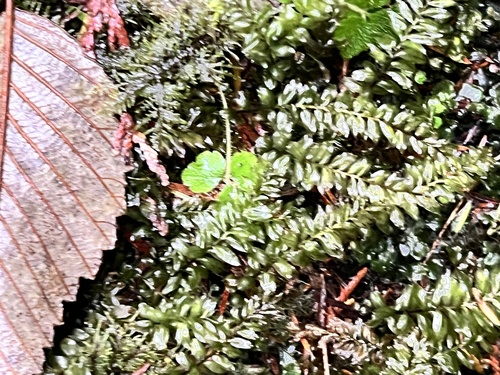
Badge Moss
Badge moss is one of the broad-leaved mosses that can make the forest floor look unexpectedly lush at close range. Its relatively large leaves capture light and water very differently from the fine leaves of feather mosses nearby. Growing through damp humus and over shaded surfaces, it contributes another layer of form and function to an already diverse bryophyte community.
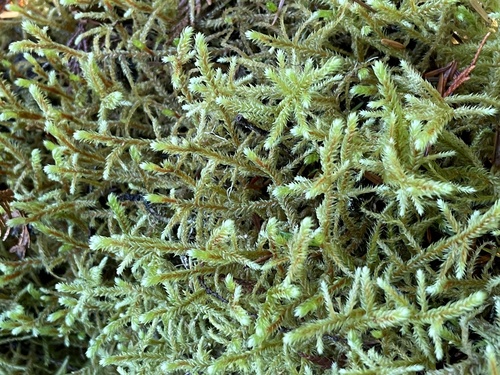
Pendulous Wing-moss
Pendulous wing-moss is strongly associated with cool, humid forests and can grow on trees as well as logs, rocks and the forest floor. In favourable conditions it can build substantial moss biomass above ground, turning branches and trunks into habitat in their own right. These elevated moss mats intercept water and airborne material while providing shelter for small organisms within the forest canopy and understory.
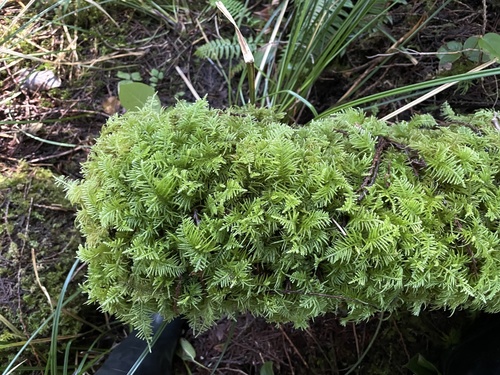
Oregon Beaked Moss
Oregon beaked moss is a distinctly Pacific coastal member of the forest-floor community. It creeps through humus and over decaying material, occupying the damp interface between living vegetation and decomposition. Like many feather mosses, it spreads horizontally and helps knit loose organic material into a persistent surface layer.
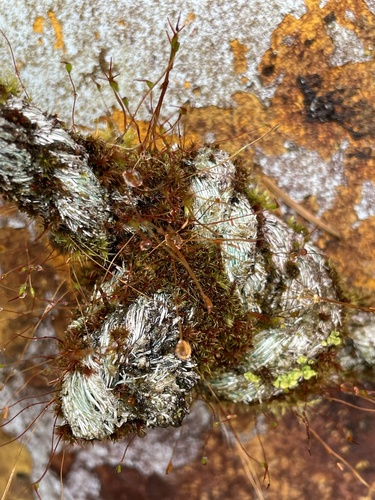
Redshank
Redshank is a reminder that mosses are not confined to deep shade and ancient logs. This remarkably adaptable species is a pioneer of exposed and disturbed surfaces and can tolerate conditions that would quickly dry many forest mosses. It is often among the small plants that begin turning bare substrate back into a biologically active surface.
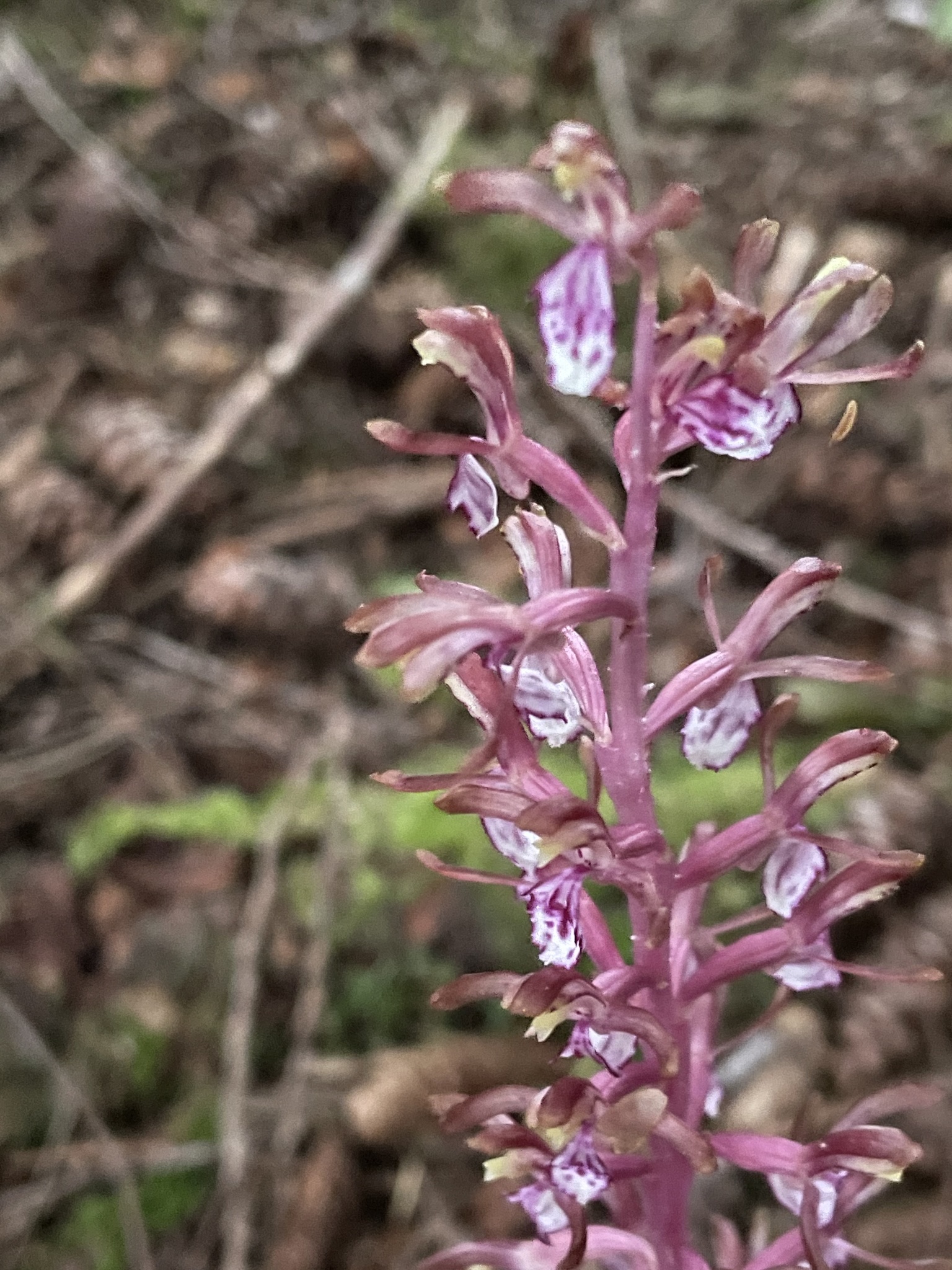
Pacific coralroot
Pacific coralroot is a native forest orchid that can be easy to miss until its pink-purple flowering stalks rise through moss, needles and fallen cones on the forest floor. Unlike most familiar plants, coralroots contain little or no chlorophyll and rely on relationships with underground fungi associated with forest soils and tree roots. At Glasgow, repeated observations show the species at different stages, from emerging shoots to full flowering.
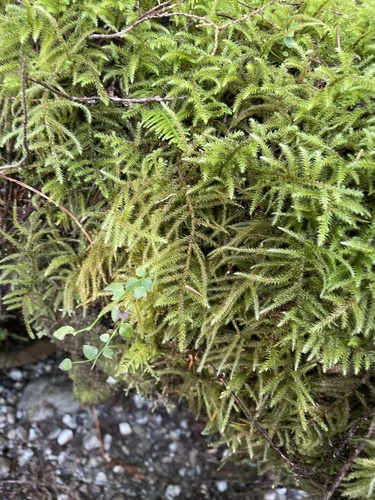
Lanky Moss
Lanky moss is a classic moss of moist Pacific coastal forest. It can form extensive carpets over soil, fallen wood and rocks, weaving around needles, cones and other forest debris rather than growing as an isolated plant. These mats help create the soft, moisture-retentive surface layer that is so characteristic of an intact coastal forest floor.
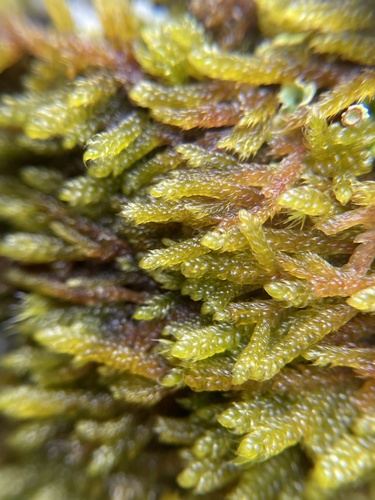
Cypress-leaved Plait-moss
Cypress-leaved plait-moss is an adaptable creeping moss capable of covering bark, wood, rock and other surfaces. Its closely packed stems create a thin living layer across substrates that might otherwise appear bare. That ability to colonize many different surfaces helps mosses extend the biologically active portion of the forest well beyond rooted soil.
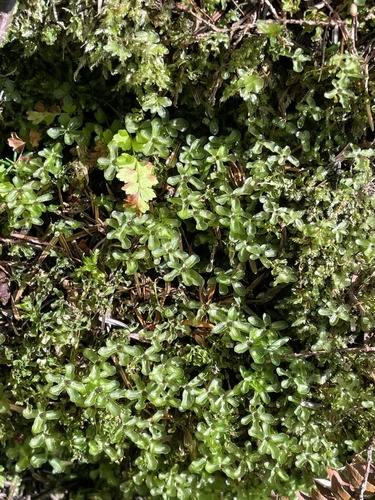
Rhizomnium Moss
Rhizomnium glabrescens is especially characteristic of moist forest substrates such as decaying logs and shaded stones. Its broad leaves and preference for rotten wood make it part of the community occupying the boundary between a fallen tree and the developing forest floor. As wood softens and decomposes, mosses help keep its surface damp while other organisms continue breaking it down.