Fungi & Lichens
The hidden network of the forest.
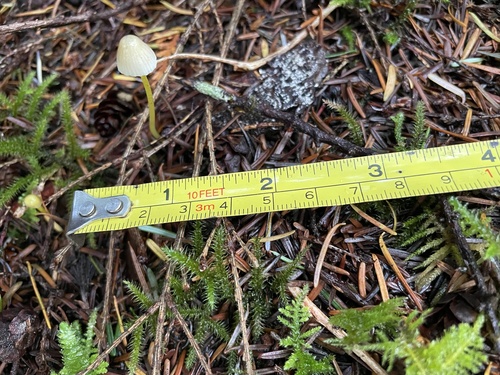
Yellowleg Bonnet
Yellowleg bonnet is one of the small mushrooms that makes a damp forest feel enchanted. Its visible mushroom is only the brief fruiting body of a much larger fungal life hidden through wood and litter. Fungi working through this layer help transform fallen needles, twigs and other organic material into forms that can re-enter the forest's nutrient cycle.
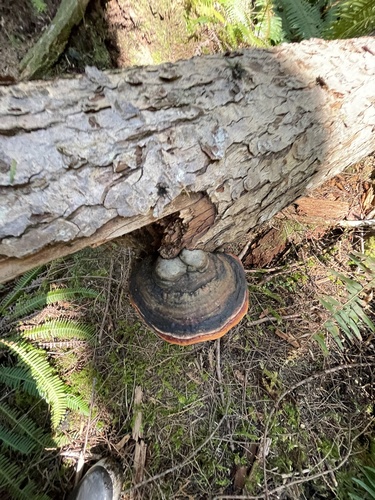
Northern Red Belt
Northern red belt is one of the wood-decay fungi that reveal a tree's second ecological life. Once wood begins to die, fungal networks penetrate it and transform its structure and chemistry over years. What looks like a solid log gradually becomes softer, richer habitat capable of holding water and supporting insects, mosses, seedlings and countless microscopic organisms.
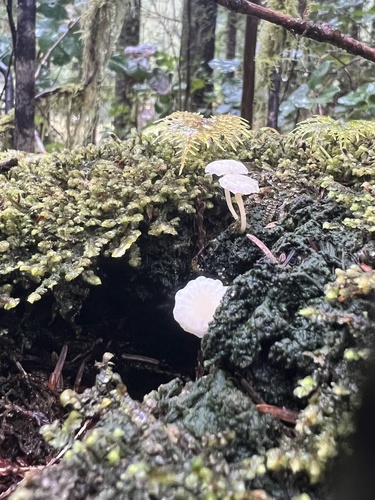
Fairy Parachutes
Fairy parachutes fully earn their wonderful name. These tiny white mushrooms appear on fallen woody material like miniature umbrellas scattered through the forest. Their delicacy disguises the fact that the fungal organism extends into the material beneath them, participating in the decomposition of small twigs and branches.
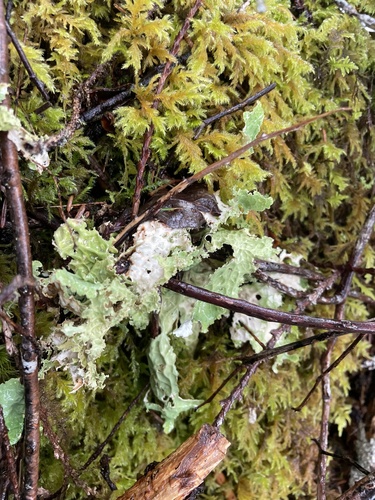
Lettuce Lichen
Lettuce lichen is a conspicuous member of the moist coastal forest community. Like other lichens, it is a partnership in which a fungus lives together with photosynthetic partners. Growing on trees allows it to occupy a very different ecological layer from the plants, fungi and animals living on or beneath the forest floor.
Fly Agaric
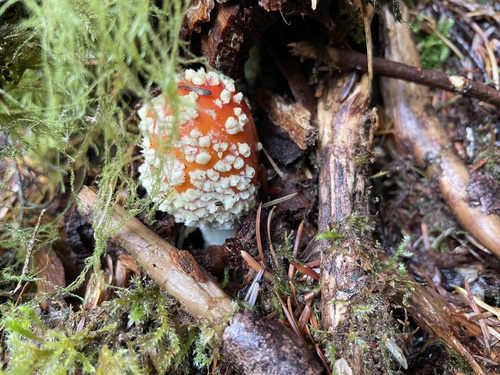
Few mushrooms announce the hidden fungal world as dramatically as fly agaric. Beneath the famous fruiting body is a network of fungal threads associated with tree roots, part of the intimate underground partnerships through which forest trees and fungi exchange resources. The mushroom above ground is a temporary reproductive structure produced by that much larger living network.
Red-juice Tooth
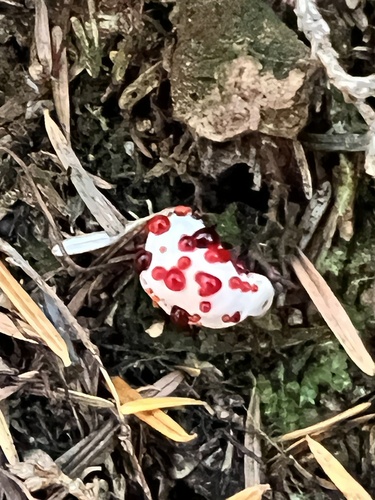
Red-juice tooth looks as though the forest invented a fantasy creature and forgot to hide it. Yet its strangest feature is invisible: the fungus lives largely below ground in association with tree roots. The extraordinary fruiting body is simply the reproductive glimpse we receive of a much larger subterranean organism.
Exobasidium parvifolii
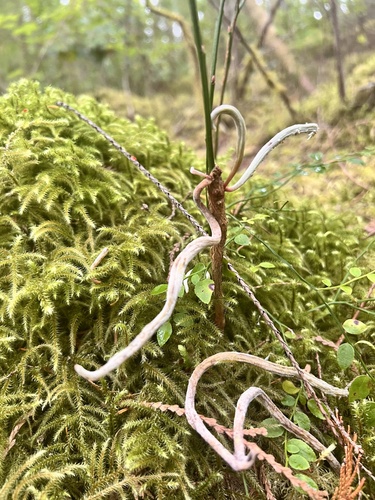
Exobasidium parvifolii is a beautiful example of how wonderfully odd fungi can be. It lives in intimate association with plants in the blueberry and huckleberry genus Vaccinium and alters the tissues in which it grows. The resulting forms blur the visual boundary between fungus and plant, because the fungal life is expressed through the architecture of its host.
Methuselah's Beard Lichen
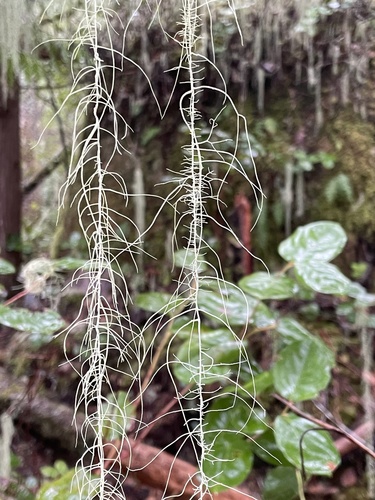
Methuselah's beard lichen is an unmistakable hanging lichen of humid forests. Its long strands occupy the branch and canopy environment, where access to clean air, moisture and suitable forest structure shapes where it can grow. It is one of those organisms that makes the atmosphere of a coastal forest visible.
Alpine Jelly Cone
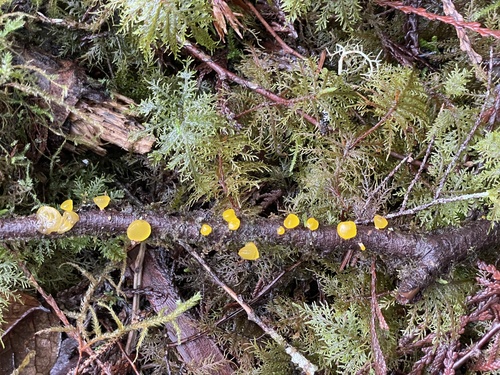
Alpine jelly cones are delightfully strange little fruiting bodies produced on damp dead wood. Their translucent, gelatinous appearance seems fanciful, but their habitat points to one of fungi's most important ecological jobs: participating in the long transformation of fallen wood after a tree has died.
West Coast Reishi
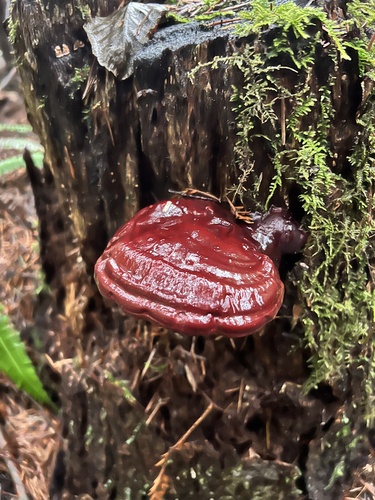
West Coast reishi is a spectacular expression of the fungal community living within wood. The glossy conk is the visible reproductive structure, while the fungus itself extends unseen through its woody substrate. Over time, fungi like this alter hard timber and help return the enormous stores of carbon and nutrients held in trees to the living forest.
Blue Tooth
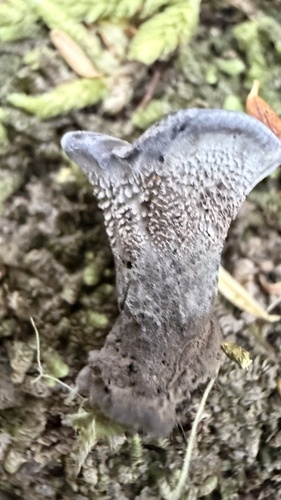
Blue tooth is the sort of mushroom that rewards kneeling down in the moss simply to admire it. Its remarkable blue tones are produced by a fruiting body that is only the visible expression of a fungus living much more extensively below ground, where it associates with forest trees. Like other tooth fungi, it reminds us how wildly inventive fungal forms can be.