Marine Invertebrates
Life beneath the tide line.
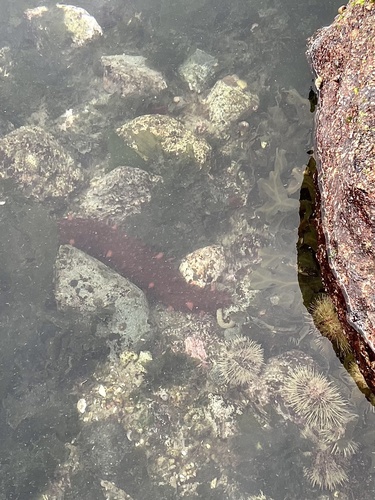
Giant California Sea Cucumber
Giant California sea cucumbers are large bottom-dwelling relatives of sea stars and sea urchins. As they move across the seafloor they consume organic material associated with sediments and surfaces, processing material that has settled out of the water above. Several observations at Greene Point show that these conspicuous animals are part of the local benthic community rather than an occasional curiosity.
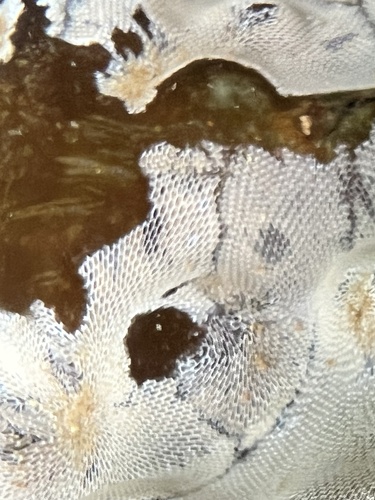
Kelp Lace Bryozoan
Kelp lace bryozoans are colonial animals that grow across kelp and other submerged surfaces. A single colony may contain many individual zooids living together, creating a fine geometric pattern that is easy to overlook without close inspection. They reveal that even the surface of another organism can become habitat.
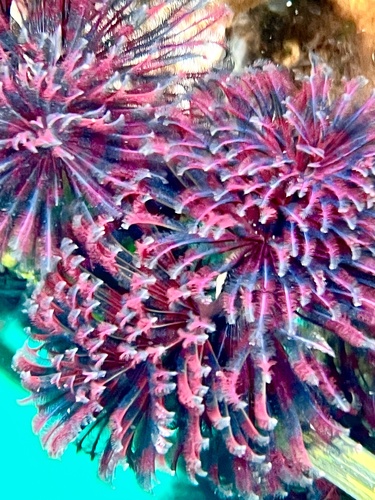
Northern Feather Duster Worm
Northern feather duster worms live permanently within protective tubes and extend elaborate crowns of tentacles into the surrounding water. Those feathery structures are used to capture suspended food while also functioning in gas exchange. Seven observations across 2022 and 2023 make them another repeatedly documented component of the Greene Point underwater community.
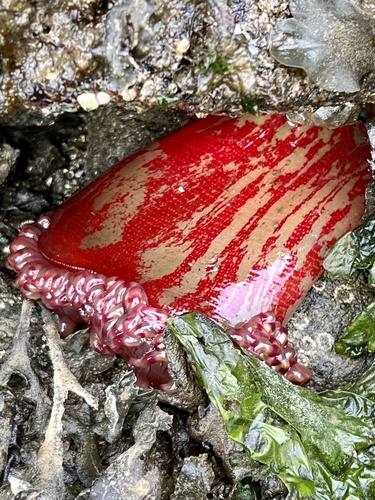
Painted Anemone
Painted anemones are colourful predators of rocky marine habitats. Their tentacles capture small animals and food particles, while the muscular column keeps the animal firmly attached to the substrate. Nine observations across 2022 and 2023 make this one of the more frequently documented underwater species in the Greene Point record.
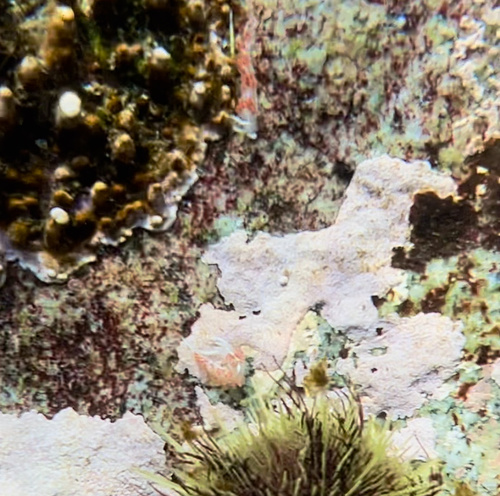
Three-lined Aeolid
The three-lined aeolid is a small nudibranch whose detailed form becomes apparent only at close range. Cerata covering the animal's back play roles in respiration and defence, giving aeolids a very different appearance from the dorid nudibranchs also documented around Greene Point.
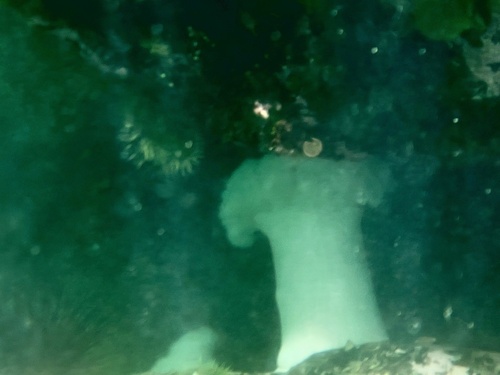
Giant Plumose Anemone
Giant plumose anemones are among the most dramatic suspension-feeding animals visible beneath the surface around Greene Point. Although they resemble flowers, they are animals that use hundreds of tentacles to capture tiny organisms and organic particles carried past them by moving seawater. Their size makes an otherwise invisible process - feeding from the current - easy to visualize.
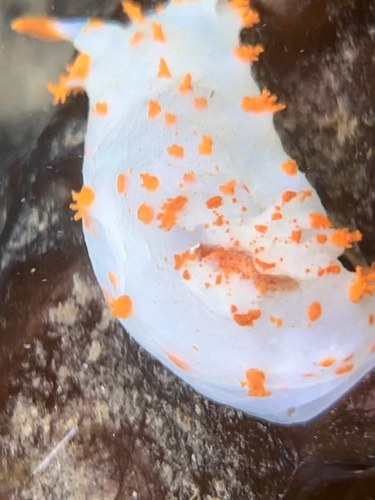
Modest Clown Dorid
The modest clown dorid is a nudibranch - a shell-less marine gastropod whose exposed body displays structures that would be hidden inside the shell of many other molluscs. Its elaborate form is a reminder that some of the most visually spectacular inhabitants of Greene Point are also among the easiest to overlook.
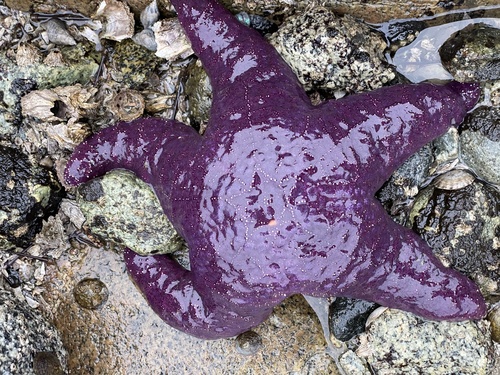
Ochre Sea Star
Ochre sea stars are familiar predators of Pacific rocky shores. They feed on mussels and other invertebrates and are famous in ecology because experiments involving this species helped establish the idea that some predators can have disproportionately large effects on community structure.
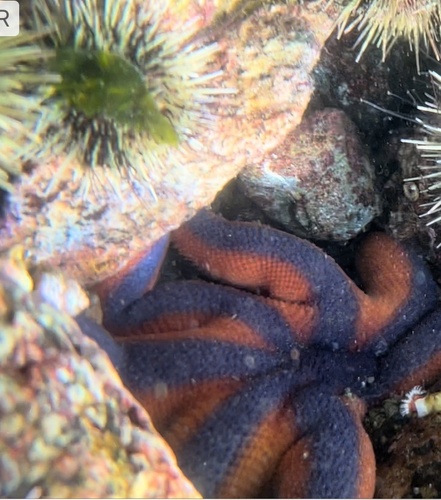
Striped Sun Star
Striped sun stars are large predatory sea stars of rocky northeastern Pacific habitats. Three observations across 2022 and 2023 add another member to the impressive diversity of sea stars documented around Greene Point. Their many arms allow them to move and hunt across structurally complex seafloor habitat.
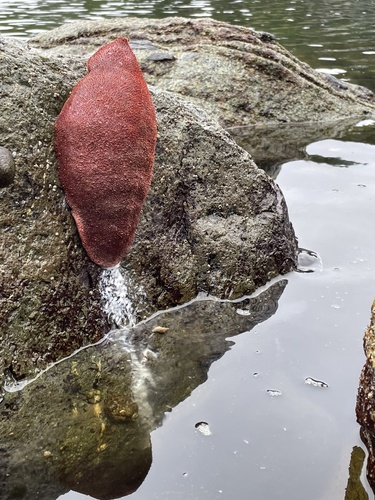
Gumboot Chiton
Gumboot chitons are the largest chitons on the Pacific coast and one of the most memorable animals of the rocky shore. They move slowly across hard surfaces, grazing on algae and other material. Nine observations in Ali's iNaturalist record make the gumboot chiton one of the repeatedly documented marine species at Greene Point.
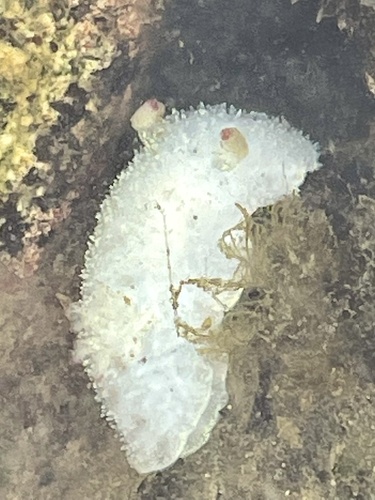
Nanaimo Dorid
The Nanaimo dorid is a northeastern Pacific nudibranch and one of several sea slug species documented around Greene Point. Nudibranchs have lost the protective adult shell typical of many other gastropods and instead display extraordinary colours, textures and exposed respiratory structures.
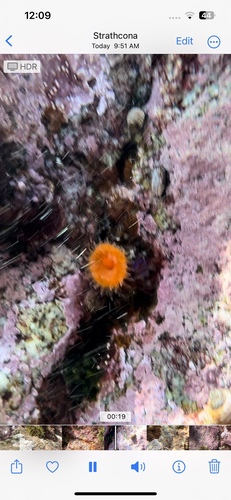
Orange Cup Coral
Orange cup coral is a solitary stony coral of the northeastern Pacific. Unlike reef-building tropical corals, each individual lives as a single cup-shaped polyp attached to hard substrate. Finding one beneath the cold waters around Greene Point is a wonderful example of how local marine life can challenge expectations.
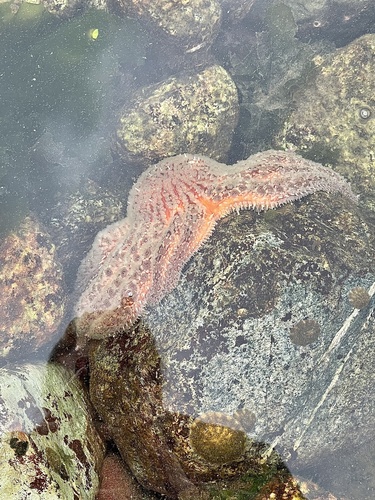
Sunflower Sea Star
Sunflower sea stars are among the largest and fastest sea stars on the Pacific coast. They are active predators capable of moving across rocky habitat in search of a wide variety of prey. A documented Greene Point observation places one of the Pacific coast's most remarkable marine predators directly within the local species record.